K9 DAO Governance Paper: Post-Exploit Strategic Pathways

I get the intent here, but I don’t fully agree, especially if we’re seriously considering Option 5 or 6, where we’re effectively deploying/migrating tokens to a new chain. The moment we decide to move, we’re not just “recovering from the hack” anymore; we’re also making choices that shape what K9 can realistically become next (liquidity venues, integrations, revenue model, user migration path, etc.). Even if the vote isn’t meant to define the entire future, it inevitably constrains it.

A real-life analogy: I recently bought a sailboat with an engine that had been underwater in saltwater. I could keep pouring time and money into trying to salvage it, but there’s a point where “recovery” becomes an expensive project with uncertain reliability. Instead, I chose a replacement used engine, not because I was ignoring the recovery problem, but because I needed a solution that also made sense for the boat’s future use.
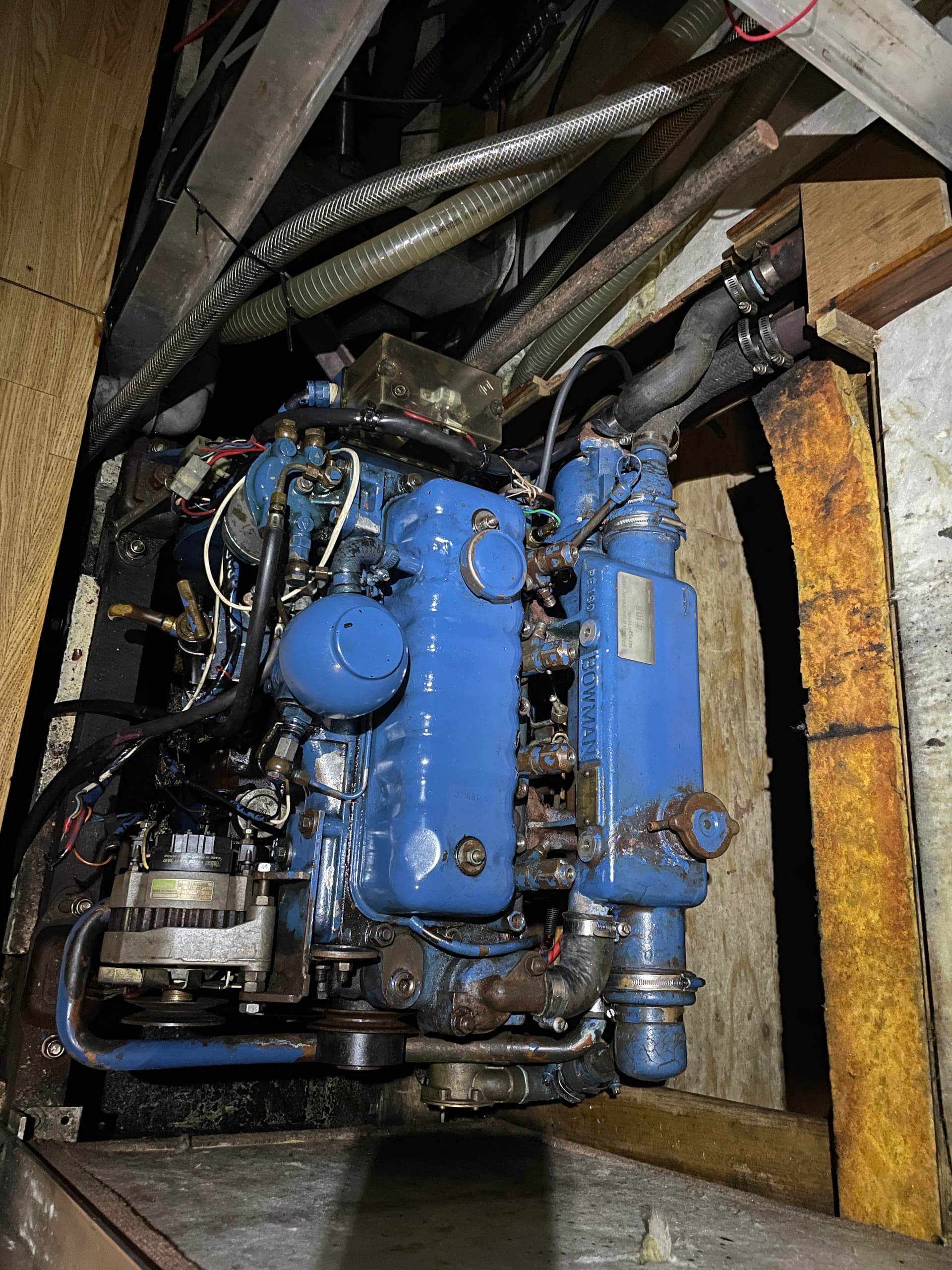
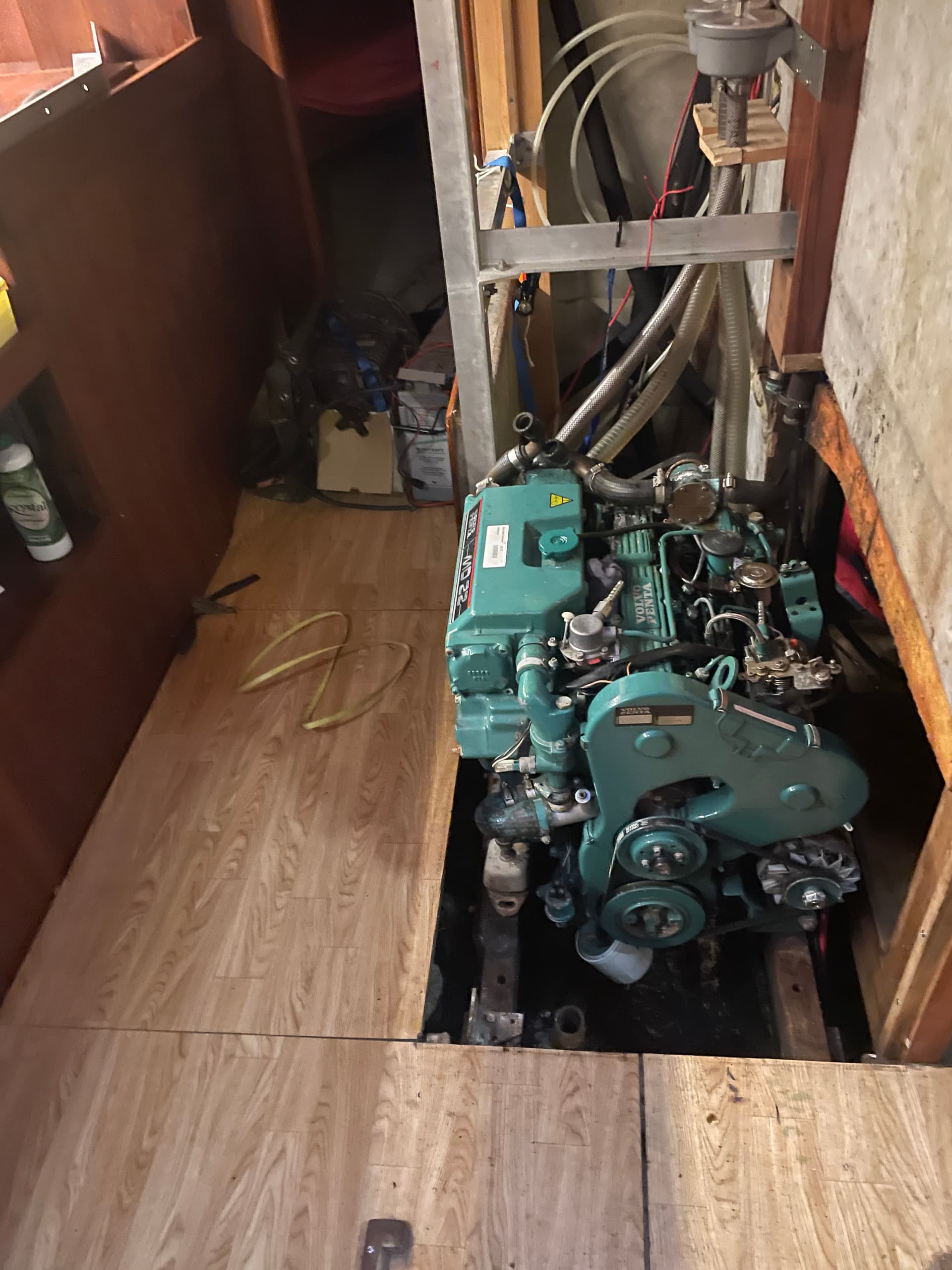
That’s how I see this: even if the proposal is framed as “recovery only,” if we’re moving chains we should at least keep the “what comes next” path in mind so we don’t solve today’s problem in a way that handicaps us tomorrow. <3

5 Likes

Thank you for this explanation. It does make me more optimistic about Option 6 if we go down that route - but I still think the surface area for risk is too much to ignore. Looking forward to learning more about this :+1:

2 Likes

I’d like to think that Option 5 is our replacement engine that gets us to better options later on when the winds turn in our favor :sailboat: :wind_face: :+1:

5 Likes

I used to tell myself the same things about Shibarium and the .io team. They were going to bring Web3 utility to the masses and onboard the world. How fortunate we all were to be getting in so early!

I kept on saying these things - even when their own “team leads” stopped saying it.

Maybe they were victims of their own optimism. Maybe it was a skill issue and they just got overwhelmed by the tech. But it’s clear that there is nothing there right now.

No UAE, no AI, no users, no value.

Even today, Shibarium’s defenders are waiting for BTC, ETFs, SHIB, and macro tides to lift everything else and hopefully drag Shibarium along with it. That’s not a growth strategy - it’s a weather forecast.

2 Likes

To clarify: none of these options are binding for K9 DAO to do something after the execution of the option.

For example, option 5 should not assume that K9 DAO now does liquid staking on Base or BNB. Base does not currently support liquid staking infra & the threshold to become a validator on BNB is >$175m worth of BNB IIRC

The vote is simply asking what the community wants to do for the 23% of tokens impacted in the hack and each have their pros and cons, but none of the options detail what could be next, because that’s up to the community

Put bluntly – K9 DAO is a liquid staking project for Shibarium, so if that is shut down, then …? Someone should not blindly vote for either option 5 or 6 out of voter apathy thinking “someone will figure it out” in terms of what K9 is next

Doing nothing is not only an option in the votes, but it’s also a possible answer to the question of “what’s next”. A vote to mint the 23% of tokens elsewhere is not a vote guaranteeing K9 becomes a successful utility project elsewhere

3 Likes

I actually think we’re pretty close in what we’re saying.

My only point is that while the vote may be scoped to “what do we do about the 23%,” some options (especially 5/6) inherently introduce big downstream constraints. Once we’re talking about minting/claiming elsewhere and deploying on a new chain, we’re no longer making a purely “recovery-only” choice, we’re also selecting a set of future constraints around liquidity, integrations, infra, and what kinds of sustainable revenue models are even realistic.

I completely agree people shouldn’t blindly vote 5/6 assuming “someone will figure it out.” That’s exactly why I think it’s healthy to at least sanity-check “what could be next” at a high level, even if it’s not binding.

Also, to be clear: I’m not assuming “Option 5 = K9 must become a validator and do native liquid staking on Base/BNB.”

  • On Base, there’s no native staking asset in the same sense as an L1, but you can still build fee-generating utility around ETH-based primitives (LSTs, lending, LP fees, etc.). That’s different from being a validator, but it can still be a viable business model.
  • On BNB, I understand the validator threshold is extremely high (your >$175m figure). Even if that’s accurate, there are still potential models that don’t require K9 to be a validator (integrations with existing LST providers, building around liquidity + lending, fee-based products, etc.). The key point is: the chain choice heavily influences which of those are feasible.

One question I’d genuinely like more clarity on: why were Base and BNB specifically called out in the paper for Option 5?
What was the selection logic and criteria?

And related: why wasn’t Polygon (POL) listed as an example destination?
I’m not saying Polygon is automatically “better,” but it feels like it should at least be part of the comparison set. If the reasoning is “Polygon staking mechanics are more complex / staking happens on Ethereum / less suitable for the original LSD thesis,” that’s totally fair, I’d just like to understand the rationale so voters can make an informed decision rather than guessing.

Even a short follow-up note outlining the chain shortlist criteria (and why certain candidates were excluded) would help the community vote with eyes open.

1 Like

So if I were to hold hypothetically 5B K9 in Bonecrusher on Shibarium, I should just call it a loss?

BNB & Base were merely examples for option 5 as far as I am aware. The criteria were that they are EVMs with low fees that the original deployer wallet did not yet have any activity on, so that the same CA could be obtained on those chains with nonce 0. Polygon would also meet that threshold. I imagine BNB / Base were the two explicit examples due to their 1-2 positions in the EVM landscape right now

6 Likes

Ty, appreciate your time spending on us noobs :sweat_smile: :folded_hands:

Without getting technical. Im choosing option 5. My reason is simple, the amount of time we have to 0. Referring to the treasury which pays the bills. We are in a shitty situation all around. No fault of our own (k9). Sometimes you have to cut off the foot to save the body. I am sad. I would be lying if I said this came as an easy choice. However logically k9 cannot do anything for anyone if k9 themselves are ok first.

5 Likes

Question
Has K9 DAO filled a case with the proper law enforcement offices?
I am not sure about others but I do not trust that Shiba IO has filed one or has the integrity of filing one. I believe this whole attack was planed and organizing by insiders that are being protected for financial gain. Every thing screams insider job. If K9 goes down they would have succeeded in their attempt. :enraged_face::enraged_face::enraged_face::enraged_face:

1 Like

Option 5 is what keeps K9 Finance DAO in motion.

Just a thought, but even if we choose Option 5, Shib.io should still be accountable for what happened. The premise of moving forward with all this is the general consensus that waiting will yield no different results than it has for other affected communities. We, quite literally, can’t afford to wait forever.

4 Likes

Question??
Would it be to much to say we are over thinking this?

Short term financial stability project to maximize K9 budget and stabilize our financial books. Could K9 just utilize our Validator system and expand it to other platforms to create income for K9.
Once we have that income stabilized we could then expand our staking system.

1 Like

This is an out-of-the-box idea, and I’m very curious to hear what you all think.

Buying back all tokens would cost around 91 ETH, but the key question is: how much liquidity is actually needed on the bridge? Would 25 ETH in K9 tokens from the DAO and 25 ETH from Shib.io be enough?

It’s also worth thinking about what 50 ETH could do for our price.
If Shib.io would be willing to collaborate on this, it could also strengthen the relationship and open up marketing opportunities.

Burning tokens on Shibarium
At the same time, the DAO could start buying K9 tokens on Shibarium.
These tokens could then be sent to a dead wallet, reducing the circulating supply than needs too restore.

Gradual bridge liquidity strategy

The DAO could send 50 ETH–K9 liquidity to the bridge. THis approach allows the DAO to:

Keep funds in reserve
Gain time for development, for example multichain expansion
Avoid large, sudden liquidity moves

Community-driven initiatives

We could also think about community-supported initiatives, such as:

Community members sending K9 tokens on Shibarium to a dead wallet

Temporarily reducing BoneCrusher rewards to 0.01%

Using a smart contract to ask whales to lend K9 tokens to the DAO for a limited time. I think that is a easy option too make. Just make option with looking period from 5 years. Give dao enough time too restore. For effort you can think about limited nft ore 10 bonus after 5 years.

This approach could combine price support, supply reduction, bridge stability, and long-term development—all while keeping the DAO financially flexible.

Looking forward to hearing your thoughts and feedback.

You are describing a variation/hybrid of option 3 or 4 with some extra gamification that causes fractional reserves in the bridge. If either of those options were selected, then yes perhaps there is room to do some of these if the community wanted to.

You are also assuming that 25 ETH is readily available from Shib.io → they’ve been reached out to now for 3 months. There has been no response. If someone gets a response and this is an option, then great. But as of right now, it is not. This was of course the 1st option that was pursued: ask Shib.io for compensation since they posted that they intended to compensate; but as of right now, there are no details or responses. There have been 10+ messages & follow ups sent that have been unanswered.

There are options in the list to continue waiting for that compensation.

7 Likes

Thanks for your reply, appreciate you take time for that.

I know about the silence from shib io and non action from them. Its wishful thinking they reply before 6/7 off January. But if Christmas miracle happens than perhaps some parts from my proposal can be used.

One thing is sure k9 have my support.

1 Like

RTOD, thank you for all this information.

My opinion, K9 was built for Liquid staking and we came to support & believe in this project. thus I think we need to modify #3 & #1.
#4,5 & 6 options state Shibarium holders would get compensated but what about the Value per token?
Also, those options don’t include starting a new Liquid Staking on a different chain. K9 was created to be LS and thats what we supported.

All the options appear to be focused on recovery of the lost K9 from Shibarium bridge hack.

The bridged K9 holders are not the only victims from the bridge hack.

Everyone one who owns K9 is a Victim of the bridge hacker and continue to be a victim of The bridge hack.

The bridge hack has damaged K9 ecosystem and prevents it from operating its day to day business activities.

Due to the continued actions or lack of action by the shibarium bridge management team. All of K9 owners continue to be a victim of two attacks on K9 Finance. The failure of the Shibarium team to communicate and understand the urgency that’s needed to get the bridge fully operational is a second attack on K9 Finance. Whether it’s intentional or not the continued lack of action from Shib.io management is unacceptable and continues to do damage to K9 finance.

Shiba.io continues to Show a Complete Lack of understanding of what is needed for a cohesive environment to support multiple organizations. How can you run and creat a block chain without communication? communicationis the key factor in any organization or relationship.

The inaction of others continuous the attack on all K9 Finance holders.

We have gotten tunnel vision on the hackers actions and forgot to look at the bigger picture.

I believe the current priority should be to address the stability of K9 and its future. Because if K9 has no future then the lost K9 continues to have no value ether way.

Then there will be no point in making holders whole because zero K9 or zero value is all the same.

In summary
I believe we are going about this backwards and we are sabotaging K9 future by doing so

1 Like

so, to be clear, you want the price to go up? Is that your concern?

I don’t think you’re wrong to ask this as the instinct to simplify and focus on revenue is completely reasonable. Reading the the comments in the thread, most people are leaning towards option 5 due to K9’s budget and runway constraints. If the other options like option 6 are going to jeopardize the treasury then I would have to choose option 5 also, as I want the best chance for the projects survival. Of course, if the runway wasn’t such a big factor I would say Option 6 all day long.

Going back to your comment, two constraints make this harder than it sounds:

First, the hack hasn’t actually been resolved yet. We still have unbacked KNINE on Shibarium, a closed bridge, and users holding assets with no exit. Until the DAO chooses and executes a path that explicitly fixes that, it’s difficult legally and ethically to just move on and build new revenue streams as if the past is settled.

Second, expanding validator operations or staking infrastructure isn’t a low-effort, low-risk income lever. Standing up validators on other chains requires:

  • chain-specific bonding or capital
  • engineering and monitoring resources
  • ongoing infra and security costs
  • governance clarity around where revenue flows and how risk is managed

All of that assumes we have a stable base to build from. Right now, the team is stuck supporting a declining (some may say dead) chain while also mapping multiple hypothetical futures, which is why execution has slowed.

I think the key sequence matters here:

  1. Resolve the Shibarium fallout in a way that’s final and defensible
  2. Give developers and contributors a single, clear direction
  3. Then evaluate revenue expansion such as validators and staking (if there is still an opportunity for this) from a clean starting point

Trying to do step 3 before step 1 risks spreading limited resources thinner and extending uncertainty, which actually hurts financial stability rather than improving it.

So I don’t think this is overthinking — I think it’s recognizing that revenue generation only works once the foundation is stable. Once the exploit is cleanly resolved, ideas like expanding validator operations absolutely make sense and should be on the table. But getting to that point first is what this vote is really about.

4 Likes